You Won’t Believe These Hidden Dining Spots in Caracas—A Photographer’s Secret Journey
Caracas isn’t just a city of skyscrapers and mountains—it’s a feast for the senses. As a photographer, I went looking for light, angles, and color, but ended up capturing something far more vivid: the soul of Venezuelan cuisine. From sizzling street arepas to rooftop dinners with city views, every meal told a story. This is not just about food—it’s about moments frozen in time, flavors that stick with you, and the unexpected beauty behind every bite. What began as a visual quest became a deeper journey into culture, resilience, and connection. In a city often defined by headlines of hardship, I found joy simmering in pots, laughter echoing in alleyway kitchens, and pride served on every plate.
Framing the Flavors: Why Caracas Surprised Me
When I first arrived in Caracas, I carried the same assumptions many do—images shaped by distant news reports of economic strain and urban challenges. I expected scarcity, perhaps even silence. What I found instead was a city pulsing with life, where creativity thrives not in spite of difficulty, but because of it. Nowhere was this more evident than in its food culture. The kitchens of Caracas do not merely feed people; they tell stories of heritage, adaptation, and hope. As a photographer, my lens quickly shifted from documenting hardship to celebrating resilience, drawn not to shadows, but to the warm glow of frying oil, steaming pots, and candlelit family tables.
What struck me most was how deeply sensory the experience was. Photography, at its best, captures more than what the eye sees—it preserves texture, temperature, and emotion. In Caracas, food became my subject because it embodied all three. A well-toasted arepa crackles under the knife, its golden crust catching the afternoon sun. A bowl of pabellón criollo—shredded beef, black beans, sweet plantains, and white rice—presents a mosaic of earthy tones and soft contrasts, perfect for composition. The way a vendor folds a fresh empanada, her hands moving with practiced ease, is a dance worth framing.
Contrary to the narrative of decline, I discovered a culinary scene defined by ingenuity. With limited access to imported goods, chefs and home cooks alike rely on local ingredients, traditional techniques, and resourcefulness. Cassava replaces wheat in breads, plantains take on savory and sweet roles, and homemade mozzarella is stretched daily in family-run dairies. This is not survival cooking—it is artistry born of necessity. And for a photographer, that kind of authenticity is priceless. The real Caracas isn’t in the headlines. It’s in the steam rising from a pot of sancocho, in the laughter at a sidewalk table, in the quiet pride of a cook presenting her mother’s recipe.
The Street Food Lens: Chasing Steam and Sizzle
No introduction to Caracas is complete without its street food—a vibrant, ever-moving tapestry of flavor and motion. To walk through the city’s bustling corners is to follow an invisible thread of scent: garlic, cumin, frying cheese, and ripe mango. As a photographer, I learned to let these aromas guide me, camera in hand, chasing the golden hour light that turns ordinary moments into visual poetry. At that magical time of day, when the sun dips behind the Ávila Mountain, the streets glow with a warm, diffused radiance that makes even the simplest meal look cinematic.
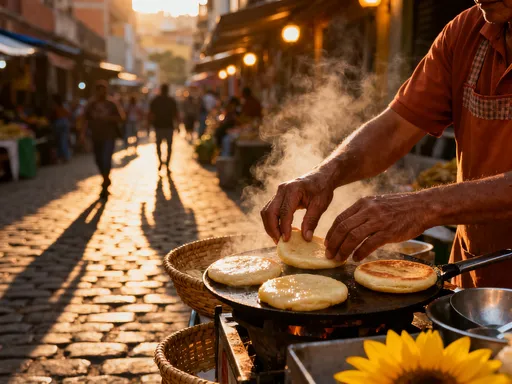
One of my most vivid memories comes from a corner stall near Plaza Venezuela, where a vendor named Luis flips tequeños—crispy fried cheese sticks wrapped in dough—with the precision of a seasoned artist. His hands move quickly, but his smile is steady. The oil sizzles, sending up curls of steam that catch the low sun, creating a hazy halo around his workspace. I waited for the right moment, then snapped a shot as he lifted a golden batch from the fryer, the cheese stretching just slightly as he placed them on a paper-lined tray. That image—simple, honest, alive—became one of my favorites.
Another highlight was the weekend market in El Hatillo, a colonial-style town on the outskirts of the city. There, cobblestone streets are lined with fruit stands bursting with color: deep purple passionfruit, bright yellow tamarillo, and red-fleshed dragon fruit arranged like a painter’s palette. I spent an entire morning photographing the textures—the velvety skin of a lúcuma, the rough bark of a fresh coconut, the glistening cut of a pineapple. Vendors welcomed my curiosity, some even posing with their displays, proud of their produce. One woman, Doña Marta, handed me a slice of maracuyá and said, “This is Caracas—sweet, strong, and full of surprises.” I couldn’t have said it better.
Street food in Caracas is more than convenience—it’s community. People gather not just to eat, but to connect. Friends meet for late-night empanadas after work. Families stop by arepa stands on weekend outings. The rhythm of the city is set by these small rituals. For a photographer, this means endless opportunities for candid shots—children watching arepas press in the grill, couples sharing a single portion of fried yuca, elders sipping freshly squeezed guava juice. These are not staged moments. They are real, unguarded, and deeply human.
Hidden Gems: Off-the-Beaten-Path Eateries That Dazzle
Beyond the well-trodden paths and tourist maps lie Caracas’ true culinary treasures—small, unassuming places known mostly to locals. These hidden gems don’t rely on flashy signage or social media hype. Instead, they thrive on reputation, word of mouth, and the kind of authenticity that can’t be faked. As I ventured into residential neighborhoods like Chacao and Altamira, I discovered family-run spots where generations have passed down recipes, and where every dish feels like an invitation into someone’s home.
One evening, I followed a narrow staircase up from a quiet plaza and found myself at a tucked-away parrilla called La Fogata. Dim lanterns hung from the rafters, casting flickering shadows on the stone walls. The air was thick with the scent of grilled meat and smoked paprika. The owner, Don Rafael, greeted me like an old friend, offering a seat near the open flame where beef skewers rotated slowly. I watched as he seasoned each piece by hand, using a blend of cumin, garlic, and a touch of bitter orange juice—a family secret, he winked. The lighting was imperfect for photography, but that’s what made it compelling. The contrast between darkness and firelight created depth, drama, and mood. I used a slower shutter speed to capture the motion of the flames, the glow on diners’ faces, the steam rising from a freshly plated dish.
Another discovery was a small café in Los Palos Grandes, painted in soft blues and yellows, with hand-painted tiles along the counter depicting tropical birds and fruit trees. Called Cafetalito, it specialized in coffee grown in the Andes and served with homemade cheese pastries. The owner, a retired schoolteacher named Elena, insisted I try her abuela’s recipe for quesillo, a creamy caramel custard. As she brought it to the table, sunlight streamed through the window, illuminating the golden top. I snapped a quiet shot—the spoon just breaking the surface, the caramel oozing slightly. She laughed and said, “Now that’s a memory.”
What makes these places so photogenic isn’t just their décor or food—it’s the sense of intimacy. In a world of polished Instagram aesthetics, these spots feel real. The tables are close together. The music is soft—perhaps a vintage salsa record. Conversations flow easily. For a photographer, this means opportunities for storytelling through detail: a chipped mug holding strong coffee, a handwritten menu taped to the wall, a cat napping under a chair. These are the elements that, when combined, create a complete picture—not just of a meal, but of a way of life.
Rooftop Feasts and City Lights: Dining with a View
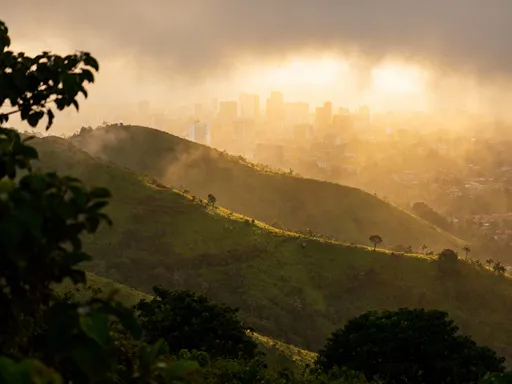
If Caracas’ street food offers warmth and immediacy, its rooftop dining provides perspective—literally and figuratively. Perched atop high-rise buildings, these elevated restaurants offer panoramic views of the cityscape, with the Ávila Mountain rising like a green sentinel in the distance. As dusk settles, the city begins to shimmer, thousands of lights twinkling like stars fallen to earth. For a photographer, this transition—from daylight to twilight to full night—is one of the most dynamic times to shoot.
I visited one such venue, Terraza 905, on a clear evening. The space was designed with photography in mind: open layout, unobstructed views, and carefully placed ambient lighting. Long wooden tables were set with simple white linens and candles in glass holders, creating warm pools of light. The menu featured modern takes on Venezuelan classics—plantain-crusted fish, arepa bowls with grilled vegetables, and a stunning tres leches cake infused with coconut. I positioned myself at the edge of the terrace, where I could frame a diner’s plate against the glowing skyline. The contrast between the warm tones of the food and the cool blues of the night sky made for a striking composition.
What impressed me most was how these spaces balance sophistication with soul. They are cosmopolitan, yes, but never lose touch with local identity. The chef at Terraza 905, a young woman named Carla, trained in Europe but returned to Caracas to honor her roots. “I want people to taste Venezuela,” she told me, “not just see it.” Her dishes are edible art—colorful, balanced, and deeply flavorful. And in that setting, with the city spread out below, each plate feels like a celebration.
For photographers, rooftop restaurants offer more than great views—they provide controlled environments where lighting, composition, and subject matter align. The golden hour here lasts longer, stretched by elevation. The city lights serve as natural bokeh, blurring into soft orbs behind focused subjects. Even the movement of waiters, carrying trays with steady hands, adds rhythm to the scene. These are not just meals—they are experiences designed to be seen, savored, and shared.
The Human Element: Capturing Chefs, Faces, and Traditions
In all my travels, I’ve learned that the most powerful images are not of food alone, but of the people behind it. A perfectly plated dish tells part of the story, but a cook’s hands, a server’s smile, or a grandmother stirring a pot—that’s where the heart lies. In Caracas, I made it a practice to ask permission before photographing anyone, not just out of respect, but because the act of asking often opens a door to conversation, and conversation leads to understanding.
I met Doña Carmen at a small fondita in Petare, one of the city’s largest neighborhoods. She has been cooking pabellón for over forty years, using the same cast-iron pot and wooden spoon. Her kitchen is small, lined with shelves of dried herbs and homemade sauces. When I asked if I could take her photo, she paused, wiped her hands on her apron, and said, “Only if you eat first.” So I did. And as I savored the rich, slow-cooked beef and sweet plantains, she shared stories of her childhood in the countryside, where her mother taught her to cook over a wood fire. Later, I photographed her standing by the stove, steam rising around her, her face lit by the glow of the burner. That image—simple, dignified, full of history—now hangs in my studio.
Respectful photography means more than just asking. It means being present. It means putting the camera down sometimes, sharing a meal, listening. In Caracas, I learned that the best photos often come after the initial shot—after trust is built, after laughter is shared. At a family-run empanada shop in Baruta, the owner’s daughter began posing playfully for my lens, then invited me to help shape the dough. My hands were clumsy, but everyone laughed. And when I finally captured the moment—her hands guiding mine, flour on our fingers—it felt earned.
These interactions remind me that photography is not extraction. It’s exchange. Every image I took in Caracas was given space to breathe, to grow from a moment into a memory. And in return, I left not just with photos, but with friendships, recipes, and a deeper appreciation for the quiet dignity of those who feed their communities.
Practical Lens: Tips for Photographers Exploring Caracas Cuisine
For photographers visiting Caracas, preparation is key—not just in gear, but in mindset. The city rewards those who move slowly, observe closely, and engage respectfully. Begin by timing your outings for optimal lighting. The golden hour, roughly an hour after sunrise and before sunset, provides soft, warm light ideal for street food photography. Midday sun can be harsh, so seek shaded areas or indoor spots with natural light from windows.
When it comes to equipment, a lightweight setup works best. I used a mirrorless camera with a 35mm prime lens, which allowed for sharp focus and beautiful depth of field in tight spaces. For low-light situations—such as candlelit dinners or dimly lit fonditas—a lens with a wide aperture (f/1.8 or lower) is essential. If you’re using a smartphone, take advantage of night mode and portrait settings, but don’t rely solely on digital enhancement. Natural light and genuine moments will always outshine filters.
Always carry a small cloth to wipe fingerprints or splashes from your lens—kitchen environments can be humid and greasy. And consider using a portable reflector or even a white notebook to bounce light onto your subject. In one shot of a fruit platter at El Hatillo market, I used a piece of white cardboard to soften shadows, creating a more balanced exposure.
Equally important are cultural practices. Always ask before photographing people. A smile and a simple “¿Puedo tomar una foto?” go a long way. If someone declines, respect their decision without question. When dining, put your camera away during conversations—being present builds trust. And remember, the best photos often come when you’re not looking through the viewfinder. Slow down. Taste the food. Listen to the stories. Let the moments find you.
Why This Journey Matters: Beyond the Plate and the Frame
Photographing Caracas’ dining culture changed me. It shifted my perspective from observer to participant, from documentarian to storyteller. I came looking for images, but I found connection. I expected scarcity, but discovered abundance—in flavor, in spirit, in resilience. This journey reminded me that food is more than sustenance. It is memory. It is identity. It is love made visible.
In a world quick to judge based on headlines, Caracas taught me to look closer. Behind every meal is a history. Behind every cook is a legacy. And behind every shared table is the possibility of understanding. Photography, at its best, does not just capture beauty—it reveals truth. And the truth I found in Caracas is this: even in the face of challenge, joy persists. It simmers in pots, rises in steam, and shines in the eyes of those who serve it.
To future travelers, I say this: come with an open heart. Seek the hidden corners. Taste the street food. Climb to the rooftops. Talk to the cooks. Let the flavors surprise you. And when you raise your camera, do so with respect and gratitude. Because in Caracas, every meal is a moment worth preserving—not just in pixels, but in the soul.