Lost in the Lanes of Fes: A Day I Actually Got Lost (And Loved It)
You know that feeling when you plan everything down to the minute, then life throws you a curveball—and it turns out to be the best part of the trip? That was me in Fes. I went for the medina, the tanneries, the food—but what I didn’t expect was how getting completely lost in its ancient alleyways would become the highlight of my journey. This isn’t just a travel story. It’s about surrendering to the chaos, trusting the hum of daily life, and finding magic in the maze. In a world where every itinerary is optimized and every destination filtered through screens, Fes offers something rare: the gift of disorientation, the beauty of the unplanned, and the quiet joy of being exactly where you never meant to be.
Arrival in Fes: First Impressions of a City Stuck in Time
Fes does not announce itself with the fanfare of a modern metropolis. There are no towering skyscrapers, no neon-lit boulevards, no rush of traffic to signal your arrival. Instead, you step off the train or bus, shoulders heavy with a suitcase that suddenly feels too large, and are met with a stillness that hums beneath the surface. The air carries the faint scent of cumin and woodsmoke, mingled with something earthier—leather, perhaps, or the ancient stones warming in the sun. The city unfolds not in straight lines but in layers, like pages of a centuries-old manuscript slowly turning.
Fes el-Bali, the old medina, is a UNESCO World Heritage site and one of the world’s largest car-free urban zones. As you approach its gates, the modern world begins to fall away. The hum of engines gives way to the rhythmic clip-clop of donkey hooves on stone, the preferred mode of transport for locals hauling goods through narrow passageways barely wide enough for two people to pass. Signs in Arabic and French mark the entrances, but once inside, even language feels different—softer, more melodic, carried on the breeze like prayer.
What strikes most is the sensory immediacy of it all. There is no buffer between you and the city. You don’t observe Fes from a distance; you are immersed in it. The walls, built of sun-baked terracotta, seem to breathe with the heat of the day. Shuttered windows with intricate iron grilles hint at lives unfolding behind them—children doing homework, grandmothers stirring pots, artisans sanding wood or polishing brass. The call to prayer rises from the minarets, not as a disruption but as a natural rhythm, like birdsong at dawn. Time here does not march forward with urgency. It meanders, folds in on itself, repeats.
For a traveler accustomed to efficiency, this can be unsettling. Where are the street numbers? Why do alleys twist and dead-end without warning? Where is the map that makes sense of it all? But these questions, born of a modern mindset, begin to dissolve as you walk deeper into the medina. Fes does not invite you to understand it. It invites you to feel it. And that feeling—of being small, of being a guest in a world that operates on its own terms—is the first gift the city offers.
Stepping into the Medina: Why You Should Let Go of Maps
Most guidebooks will tell you to download an offline map, to mark your riad with a pin, to keep your phone charged and ready. And while that advice comes from a place of concern—after all, the medina spans over 500 acres and contains more than 9,000 alleyways—it misses the point entirely. The Fes medina is not a puzzle to be solved. It is a living organism, breathing and shifting with the rhythms of daily life. To navigate it with a map is like trying to understand a symphony by reading the sheet music. You might grasp the notes, but you’ll miss the music.
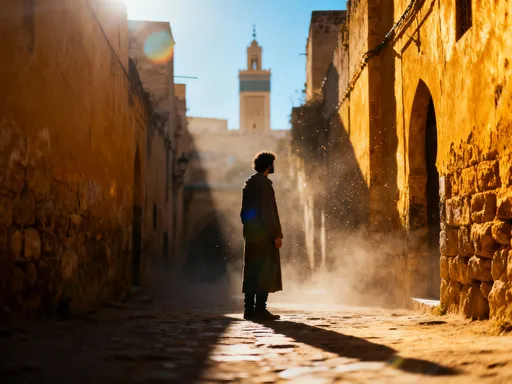
My own surrender came about an hour after arrival. I had confidently stepped out of my riad, map open on my phone, determined to find the famous Bou Inania Madrasa. But within ten minutes, the screen had gone dark—no signal, no GPS. I turned a corner, then another, then another, each passage looking nearly identical: arched doorways, faded blue paint, baskets of herbs hanging in doorways. I stopped counting turns. My chest tightened. I was well and truly lost.
And then, something shifted. A boy on a bicycle grinned as he passed, ringing a small bell. An old woman sitting on a low stool offered a piece of dried apricot with a smile. A shopkeeper called out not to sell me something, but to ask where I was from. I took a breath. I closed the phone. I let go.
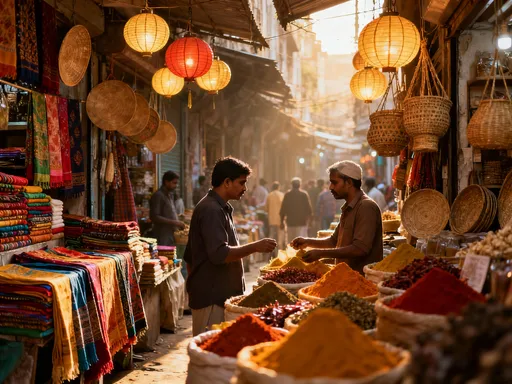
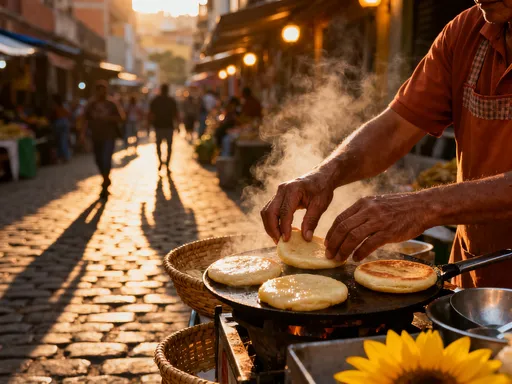
What followed was not disorientation but discovery. Without a destination, every turn became an invitation. I found myself in a courtyard where men played backgammon under a fig tree, their laughter rising like smoke. I paused at a stall where a man shaped dough into perfect circles, frying them into msemen right before my eyes. I accepted a glass of mint tea from a carpet seller who asked for nothing in return but conversation. These were not experiences I could have scheduled. They were gifts of presence, of being open to the unexpected.
Letting go of the map meant letting in the city. It meant trusting that even if I didn’t know where I was going, I was exactly where I needed to be. The medina, in its infinite complexity, has a way of guiding those who stop trying to control the path. It rewards curiosity, patience, and humility. And in doing so, it transforms travel from a checklist into a conversation—one that unfolds not in words, but in glances, gestures, and shared moments of quiet understanding.
The Tanneries: A Sensory Overload You Can’t Unsee (Or Unsmell)
No visit to Fes is complete without seeing the Chouara Tannery, one of the oldest and largest in the city. Located deep in the heart of the medina, it is both a marvel of craftsmanship and an assault on the senses. As you approach, the smell arrives first—a pungent, leathery aroma that rises like a wall, impossible to ignore. Locals hand out sprigs of mint to visitors, pressing them to their noses like talismans against the intensity.
The viewing platform offers a breathtaking panorama. Below, dozens of stone vats stretch out like a painter’s palette, each filled with a vivid dye: saffron yellow, henna red, indigo blue, mint green. Men in bare feet move between them, stirring hides with long poles, their movements rhythmic and practiced. The leather is soaked, cleaned, dyed, and softened using techniques that have changed little in over a thousand years. Pigeon droppings, once used to remove hair from hides, have largely been replaced by chemical alternatives, though some traditionalists still swear by the old ways.
What makes the tannery so powerful is not just its visual spectacle, but its authenticity. This is not a performance for tourists. It is real work, carried out in cramped, sweltering conditions, by families who have passed down their skills through generations. The hides will become bags, shoes, jackets—pieces of Fes that travel the world, carrying with them the scent and soul of the city.
For many, the experience is overwhelming. The smell alone can bring tears to the eyes. But there is dignity in this intensity. It reminds us that beauty often comes from effort, that tradition requires endurance, and that some of the most meaningful experiences are not comfortable. The tannery does not cater to delicate sensibilities. It demands presence. And in return, it offers a rare glimpse into a world where craft is not a hobby, but a way of life.
Hands-On in a Ceramic Workshop: Painting My Own Plate
If the tannery is a testament to endurance, the ceramic workshops of Fes are a celebration of artistry. Zellige tilework, hand-painted pottery, and intricate mosaics are hallmarks of Moroccan design, and nowhere is this more evident than in the pottery studios tucked into quiet corners of the medina. One afternoon, drawn by the sight of cobalt-blue plates drying in the sun, I stepped into a small workshop where a father and son team were at work.
The air was cool inside, a relief from the midday heat. Shelves lined the walls, filled with pieces in various stages of completion—unglazed bowls, tiles with geometric patterns, teapots painted with delicate floral motifs. The master artisan, Hassan, greeted me with a warm nod and motioned for me to sit. Without a word, he placed a plain white plate before me, handed me a fine brush, and pointed to a tray of pigments.
What followed was not a class in the Western sense, but an invitation to participate. Hassan demonstrated a traditional Fassi pattern—interlocking stars and vines—then stepped back, allowing me to try. My first strokes were hesitant, my lines uneven. But he did not correct me. Instead, he smiled and said, “It is not about perfection. It is about intention.”
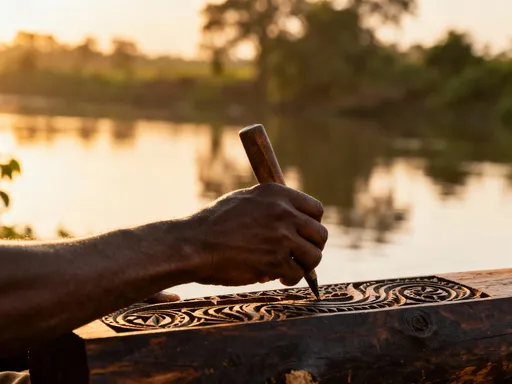
As I painted, I watched him work—a single brush, no stencils, no rulers. His hand moved with the confidence of decades, each stroke deliberate, each color layered with care. His son, barely in his twenties, worked beside him, learning not from instruction, but from observation. This was not just a business. It was a legacy.
Two hours later, my plate was finished—imperfect, slightly smudged, but undeniably mine. Hassan wrapped it carefully, explaining it would be fired and glazed before I left Fes. Holding it later, I felt a pride deeper than any souvenir could inspire. This was not something I had bought. It was something I had made, with my own hands, in a city that had taught me to slow down and pay attention. In that small act of creation, I had touched a tradition, connected with a craftsman, and taken home not just an object, but a memory etched in color and clay.
Food as a Gateway: From Street Stalls to Family Kitchens
In Fes, food is more than sustenance. It is language. It is hospitality. It is memory. From the first morning, when the scent of freshly baked msemen drifted through the riad’s courtyard, I understood that to know this city, I would need to taste it—deeply, slowly, with gratitude.
My first real meal was a lamb tagine at a family-run riad tucked behind an unmarked door. The dish arrived steaming, the meat so tender it fell apart at the touch of a fork. Preserved lemons and green olives gave it a bright, briny depth, while cinnamon and saffron whispered of distant trade routes. The owner, Fatima, joined me at the table, not to serve, but to share. She spoke of her grandmother’s recipe, of cooking for her children, of how food binds people across generations.
But the most unexpected moments came on the streets. One evening, I stopped at a stall where an elderly vendor folded warm msemen into squares, drizzling them with honey and crushed almonds. He handed me one without speaking, his eyes crinkling at the corners. I ate it standing up, the honey dripping down my fingers, the flavor rich and comforting, like something I had known before I even arrived.
The most profound invitation, however, came by accident. Lost again—this time near a small mosque—I hesitated at a doorway as a woman called out to me. I didn’t understand the words, but her gesture was clear: come in. Inside, her kitchen was warm, the air thick with the scent of cumin and lentils. She was making harira, the traditional soup served during Ramadan. She set a bowl before me, then sat in silence as I ate. No questions, no expectations. Just nourishment, offered freely.
These meals were not transactions. They were exchanges of trust, moments of connection that transcended language. In a world where dining is often rushed or solitary, Fes reminded me that food is meant to be shared, that a table—whether in a riad, a stall, or a humble kitchen—can be a place of belonging.
The Hidden Hammam: A Moment of Calm in the Chaos
After days of walking, of absorbing sights and sounds, my body ached. My mind, too, felt cluttered—full of impressions, conversations, newness. A local friend suggested a visit to a traditional hammam, not the tourist-oriented ones with spa music and scented oils, but a neighborhood bathhouse used by women of the medina.
The entrance was unassuming, marked only by a heavy wooden door. Inside, the air was thick with steam. Women of all ages sat on marble benches, some scrubbing their arms, others washing their hair under low stone spouts. No one stared. No one spoke. There was a quiet solidarity, a shared understanding that this was not a place for performance, but for renewal.
A bath attendant, her arms strong from years of work, guided me through the ritual: undress, sit, let the heat open your pores. She scrubbed my back with a rough glove, removing layers of dead skin and, it felt, layers of stress. Then came the soap—black olive paste, rich and earthy—followed by a warm rinse. I closed my eyes. The sound of water, the murmur of low voices, the rhythm of breath—it all slowed me down.
In that steamy silence, something shifted. The need to see everything, to do everything, to understand everything, fell away. I was not a traveler. I was not a guest. I was simply a woman, resting. The hammam, in its simplicity and honesty, offered a kind of grace—a reminder that care is not indulgence, but necessity. When I emerged, wrapped in a soft towel, my skin glowing, my mind quiet, I felt not just clean, but reset.
Why Getting Lost Was the Best Plan: Reflections on Slow Travel
Looking back, the moments I remember most are not the ones I planned. I did eventually see the Bou Inania Madrasa, the Al-Attarine Madrasa, the tanneries from every angle. But what stayed with me were the unplanned encounters—the shared tea, the painted plate, the soup in a stranger’s kitchen, the silence of the hammam.
Fes taught me that travel is not about control. It is not about checking off landmarks or collecting photos. True travel is about presence. It is about allowing yourself to be changed by a place, not just observing it from a distance. In a culture that glorifies speed and efficiency, getting lost feels like failure. But in Fes, it feels like freedom.
Slow travel is not a trend. It is a return—to curiosity, to connection, to the belief that the best things in life are not found on a map. It is the willingness to walk without a destination, to say yes to an invitation, to sit quietly and let the world come to you. It is understanding that disorientation is not the enemy of discovery, but its companion.
And in that slowness, something remarkable happens. You begin to notice details—the pattern of light on a wall, the sound of a child laughing, the way an old man smiles when you greet him in broken Arabic. These are not highlights. They are the fabric of the journey. They are what make a place feel alive, not as a destination, but as a home, however briefly.
Fes Didn’t Change Me—It Remembered Me
Fes did not transform me into someone new. It reminded me of someone I had forgotten—the version of myself who is curious, open, willing to be surprised. In the maze of its alleys, I found not confusion, but clarity. In the noise of the souks, I found stillness. In the kindness of strangers, I found belonging.
This city does not reveal itself to those who rush. It unfolds for those who wander with patience, who listen more than they speak, who understand that the most meaningful paths are often the ones without signs. To travel through Fes is not to conquer it, but to be humbled by it.
So if you go, leave the map behind. Let the donkeys guide you. Accept the mint tea. Say yes to the unknown. Let the world surprise you, not with grand gestures, but with quiet moments that settle into your bones. Because sometimes, the best way to find yourself is to get completely, beautifully lost.