Lost in the Quiet Beauty of Ahmadi’s Forgotten Architecture
Walking through Ahmadi, Kuwait, feels like flipping through the pages of a well-worn history book—each building tells a story. I didn’t expect to be so moved by concrete and aging facades, but there’s a quiet beauty here shaped by time, oil, and resilience. Slow travel isn’t just about pace; it’s about noticing the details others overlook—the symmetry of old windows, the texture of sun-faded walls. In Ahmadi, architecture becomes a silent narrator of a city that built a nation. What began as a functional settlement for oil workers has evolved into an unexpected archive of mid-century design, colonial influence, and desert adaptation. This is not a city of grand monuments, but of humble permanence—where every structure carries the weight of memory and the quiet dignity of purpose.
The Rhythm of Slow Travel in an Industrial City
Most travelers rush through industrial cities, eyes fixed on destinations beyond the smokestacks and wide boulevards. Ahmadi, nestled in Kuwait’s southern reaches, is often bypassed entirely. Yet, those who pause discover a different kind of beauty—one that reveals itself only when approached with patience and intention. Slow travel, in this context, is not merely a trend but a necessity. It allows visitors to peel back the surface of what appears to be a utilitarian landscape and uncover layers of human story embedded in brick and mortar. The rhythm of life here is steady, unhurried, shaped by decades of routine and resilience. There are no crowds, no souvenir shops, no loud announcements—just the soft hum of daily life unfolding beneath wide desert skies.
The city’s layout, with its broad avenues and open green spaces, was designed for function, not spectacle. Yet, within that functionality lies a quiet elegance. Tree-lined streets cast long shadows in the late afternoon, creating natural corridors of shade that invite walking. The spacing between buildings prevents the claustrophobia common in denser urban areas, offering instead a sense of breathing room that feels almost therapeutic. This deliberate planning reflects an era when quality of life was considered essential, even in remote company towns. For the slow traveler, Ahmadi becomes a place of reflection, where one can walk for hours without encountering a single tourist, yet feel profoundly connected to the past.
What sets Ahmadi apart is its resistance to the typical narrative of industrial decay. While many oil-dependent towns fade into obscurity once resources decline, Ahmadi has retained a sense of identity. Its architecture, though aging, still stands with dignity. The absence of commercial clutter allows the built environment to speak more clearly. There are no flashy billboards or modern glass towers competing for attention—just honest, unembellished structures that served a purpose and continue to do so. This makes Ahmadi an ideal destination for those seeking authenticity over spectacle, depth over dazzle. It challenges the assumption that meaningful travel requires exoticism or luxury, proving instead that significance can reside in the ordinary, the overlooked, the enduring.
Origins of Ahmadi: Where Oil and Architecture Met
Ahmadis story begins in the early 20th century, when the discovery of oil transformed Kuwait from a modest Gulf trading hub into a nation of growing global importance. In 1946, the Anglo-Persian Oil Company—later British Petroleum—established Ahmadi as the administrative and operational center of its Kuwaiti operations. The city was not an organic settlement but a planned community, meticulously designed to house foreign engineers, technicians, and their families. Its founding marked a turning point not only for the oil industry but for urban development in the region. Unlike traditional Kuwaiti towns that grew organically around the sea and souks, Ahmadi was laid out on a grid, with zoning for residential, administrative, and recreational areas—a concept unfamiliar in the Gulf at the time.
The architectural blueprint followed British colonial town planning principles, adapted to the harsh desert climate. Wide streets were oriented to catch prevailing winds, promoting natural ventilation. Generous setbacks between buildings allowed for gardens and shaded outdoor spaces. Homes were built with thick walls to insulate against heat, and rooftops were designed with slight pitches to handle rare rainfall—an unusual feature in a region known for its aridity, but a nod to British engineering standards. The use of stucco and pale pastel colors helped reflect sunlight, reducing indoor temperatures. These design choices reveal a careful balance between imported aesthetics and local environmental demands.
What emerged was a unique architectural hybrid—Western in form, but subtly modified for the Gulf. The city center featured institutional buildings constructed with stone and reinforced concrete, materials chosen for durability. These structures housed offices, laboratories, and communication centers, forming the backbone of the oil operation. Surrounding them were residential neighborhoods where expatriate families lived in bungalows with large verandas, private gardens, and communal playgrounds. This separation of zones—industrial, administrative, residential—was revolutionary for its time and set a precedent for future urban planning in Kuwait. Today, these original design decisions remain visible, offering a tangible link to the moment when modernity arrived in the desert.
The Bungalow Legacy: Homes That Whisper History
The residential neighborhoods of Ahmadi are defined by their single-story bungalows, modest in scale but rich in character. These homes, built primarily between the 1940s and 1970s, were designed to provide comfort and stability for expatriate workers and their families. Each bungalow follows a similar pattern: a low-pitched roof, wide overhanging eaves, a front veranda shaded by trellises, and high ceilings that allow hot air to rise. Walls are thick, often painted in soft yellows, pale blues, or cream—colors that harmonize with the desert light. Windows are framed with metal grilles, both for security and to create intricate shadow patterns on interior walls throughout the day.
These homes were more than shelters; they were part of a broader social experiment in company town living. The oil company provided not just housing but also utilities, maintenance, and community services. Families lived in close proximity, fostering a strong sense of belonging. Shared green spaces, playgrounds, and footpaths encouraged interaction, creating neighborhoods that felt more like extended families than mere collections of houses. Even today, some of these communities remain intact, with longtime residents who speak fondly of a time when doors were left unlocked and children played freely until dusk.
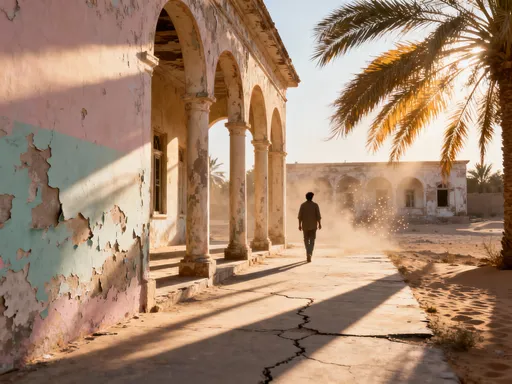
Yet, time has taken its toll. While some bungalows have been carefully maintained or renovated, others show clear signs of neglect. Peeling paint, cracked stucco, and overgrown gardens hint at a fading era. Some homes have been repurposed, converted into offices or storage spaces, their original character obscured. Others stand empty, waiting for a future that remains uncertain. Despite this, the bungalow remains a powerful symbol of Ahmadi’s heritage. It represents a moment when architecture was designed with people in mind—when comfort, community, and climate responsiveness were prioritized over status or grandeur. For the observant traveler, these homes are not relics but living testimonies to a way of life that valued simplicity, connection, and dignity.
Institutional Grandeur: Schools, Clubs, and Shared Spaces
Beyond the residential areas, Ahmadi’s institutional buildings stand as enduring monuments to a vision of civic life. Constructed with a sense of permanence, these structures were meant to serve not just functional roles but symbolic ones as well. The old schools, for example, feature symmetrical facades, tall arched windows, and central courtyards that once buzzed with student activity. Built to British educational standards, they were among the first modern schools in Kuwait, offering quality education to both expatriate and local children. The architecture reflects this dual purpose—formal enough to convey authority, yet warm enough to feel welcoming.
Recreational clubs were equally important in shaping community life. The Ahmadi Sports Club, established in the mid-20th century, included tennis courts, a swimming pool, a library, and a clubhouse with a large dining hall. Its main building, with its colonnaded entrance and shaded verandas, was a hub of social activity. Families gathered for weekend meals, children attended summer programs, and employees celebrated milestones together. The design emphasized openness and accessibility, with large windows connecting indoor and outdoor spaces. Even now, though usage has declined, the sense of order and care in these buildings remains palpable.
Administrative offices and technical buildings also reflect a commitment to quality. The original headquarters of the Kuwait Oil Company, though no longer the main operational center, still stands with quiet authority. Its clean lines, central tower, and surrounding plaza evoke a sense of stability and professionalism. Constructed with locally quarried stone and reinforced concrete, it was built to last. Inside, high ceilings and large windows create a sense of airiness, a deliberate contrast to the heat outside. These buildings were not just workplaces—they were statements. They communicated that this was a serious enterprise, one that valued precision, discipline, and long-term thinking. Today, even as functions shift and new offices rise elsewhere, these structures continue to inspire respect, not through ornamentation, but through their enduring presence.
Modern Layers: How New Kuwait Is Reshaping the Old
As Kuwait continues to grow and modernize, Ahmadi finds itself at a crossroads. The city that once stood apart as a self-contained company town is now being absorbed into the broader urban fabric. New apartment complexes, built with contemporary designs and modern amenities, are appearing on the city’s edges. These structures, often made of glass and steel, contrast sharply with the low-rise, stucco-clad bungalows of the past. While they meet the housing needs of a changing population, they also raise questions about identity and continuity. The uniformity of many new developments lacks the individuality and craftsmanship seen in older buildings, leading to concerns about the erosion of Ahmadi’s unique character.
Urban change is not inherently negative, but it does require thoughtful management. Currently, there is no formal heritage protection program for Ahmadi’s mid-century architecture. Unlike historic districts in Kuwait City or UNESCO-recognized sites in neighboring countries, Ahmadi’s buildings are not legally safeguarded. This leaves them vulnerable to demolition or unsympathetic renovation. Some structures have already been altered beyond recognition, their original features replaced with modern finishes that disregard historical context. Others stand in limbo, too costly to restore but too significant to ignore.
Yet, there are signs of awareness. Local historians, architects, and former residents have begun advocating for preservation. Photography exhibitions, oral history projects, and social media campaigns have drawn attention to the city’s architectural legacy. A few key buildings, such as the old school and the sports club, have received minor restorations, suggesting that change does not have to mean erasure. The challenge now is to find a balance—how to accommodate growth without sacrificing memory. One possible path is adaptive reuse: transforming old buildings into cultural centers, museums, or community spaces. This approach honors the past while serving present needs, ensuring that Ahmadi’s story continues to be told through its physical landscape.
Walking the Streets: A Day in the Life of Observation
To truly understand Ahmadi, one must walk its streets slowly, attentively. Begin at sunrise, when the desert light is soft and golden. The long shadows of palm trees stretch across the sidewalks, their fronds rustling in the morning breeze. As the sun rises, it illuminates the textured surfaces of stucco walls, revealing cracks and repairs that tell of decades of weathering. Turn down a residential lane, and the geometry of window grilles casts intricate patterns on the ground—shifting minute by minute as the sun climbs. The air is still cool, carrying the faint scent of jasmine from a garden hedge.
Mid-morning brings a different rhythm. Children walk to school in uniforms, their voices echoing under the covered walkways that connect buildings. Shopkeepers open metal shutters, revealing small grocery stores and repair shops tucked into ground floors of older buildings. A man waters his front garden, the sound of sprinklers mixing with the distant hum of traffic. At the corner, a group of elders sit beneath a shaded bench, sipping tea and speaking quietly. There is no rush, no urgency—just the steady pulse of daily life.
By afternoon, the heat intensifies, and the city slows. Most people retreat indoors, leaving the streets quiet. This is the best time to explore the older administrative buildings. Walk past the former company offices, now used for municipal services. Notice the craftsmanship in the stone carvings above doorways, the symmetry of the windows, the way the buildings seem to grow from the ground rather than sit atop it. In a quiet courtyard, a single tree provides shade, its roots gently lifting the surrounding pavement. Later, as the sun begins to set, return to the residential areas. Watch how the warm light bathes the pastel walls, turning them into glowing canvases. A woman hangs laundry on a veranda, the fabric fluttering like flags. A cat naps on a windowsill. These are not grand moments, but they are real, and they matter.
Why Ahmadi Matters: Reclaiming Narrative Through Design
Ahmadis significance extends far beyond its role in the oil industry. It is a living archive of mid-20th century urban planning, a testament to how architecture can shape community and identity. In an era when cities around the world are tearing down the past to make way for the new, Ahmadi offers a different lesson: that value resides not only in innovation but in continuity. Its buildings are not just structures—they are vessels of memory, holding stories of migration, labor, family, and resilience. They remind us that progress does not have to mean erasure, and that even the most functional spaces can become sacred through time and use.
For travelers, Ahmadi challenges the notion that meaningful destinations must be famous or picturesque. Beauty exists in the weathered brick, the well-placed window, the quiet street where life unfolds without performance. By choosing to visit such places, travelers participate in a quiet act of preservation—bearing witness, paying attention, remembering. This form of tourism does not require grand gestures, only presence and respect.
More broadly, Ahmadi invites us to reconsider how we value our built environment. In a world obsessed with speed and novelty, it stands as a reminder that some things are meant to last. Its architecture speaks of a time when buildings were made to serve people, not just profits or prestige. It calls for a renewed appreciation of thoughtful design, community-centered planning, and the quiet dignity of everyday spaces. As Kuwait moves forward, the story of Ahmadi should not be forgotten. Instead, it should be honored—not by freezing it in time, but by learning from it, adapting its lessons, and ensuring that the next generation can still walk its streets and feel, as so many have, the quiet beauty of a city that built a nation.