You Won’t Believe These Hidden Architectural Gems in Asunción
When I first wandered through Asunción, I expected quiet streets and colonial charm—but what I found was mind-blowing. The city’s architecture is a living timeline, where Spanish-era churches stand beside bold modernist designs and colorful art deco facades hide in plain sight. As a photographer, I was hooked. Every corner told a story, not just in history, but in texture, light, and form. If you're chasing unique urban shots, this city deserves your lens.
First Impressions: A City That Defies Expectations
Arriving in Asunción, one might mistake it for a sleepy capital tucked away from the global spotlight. There are no towering skyscrapers dominating the skyline, no overwhelming crowds rushing through neon-lit avenues. Instead, the city unfolds gently along the banks of the Paraguay River, its rhythm slow and deliberate. Yet beneath this unassuming exterior lies a rich architectural tapestry woven through centuries of cultural shifts, political changes, and artistic evolution. Unlike more polished South American capitals, Asunción reveals its beauty gradually, rewarding those who take the time to look closely.
The city’s architectural identity is shaped by its layered past. Founded in 1537 by Spanish colonists, Asunción is one of the oldest cities in South America, and its early colonial roots are still visible in preserved buildings near the historic center. Over time, waves of immigration—from Italians, Germans, and Lebanese—brought new styles and construction techniques, enriching the visual language of the city. The 19th century saw the rise of neoclassical public buildings, symbols of a newly independent nation eager to project stability and dignity. In the 20th century, modernist and art deco movements took hold, particularly during periods of economic growth between the 1920s and 1940s.
What makes Asunción especially compelling for architectural enthusiasts is the lack of uniformity. There is no single dominant style that overwhelms the others. Instead, structures from different eras stand side by side, sometimes in harmonious dialogue, other times in striking contrast. A 17th-century church may sit just blocks away from a bold concrete university building from the 1960s. This coexistence creates a dynamic urban landscape that feels authentic and uncurated—a city that evolved organically rather than being reshaped for tourism. For visitors, this means every neighborhood offers something unexpected, and even a casual stroll can lead to a surprising discovery.
The Heart of the City: Plaza de Armas and Surrounding Landmarks
The best place to begin any architectural exploration of Asunción is the Plaza de Armas, the city’s central square and historic nucleus. Laid out in the colonial grid system, the plaza serves as both a geographical and symbolic heart. Surrounded by significant government and religious buildings, it offers a concentrated view of the city’s architectural evolution. The square itself is modest in size compared to those in larger capitals, but its surroundings are rich in detail and historical weight.
Dominating the northern edge of the plaza is the Palacio de Gobierno, also known as the Palacio de López. This neoclassical masterpiece, with its white façade, grand columns, and symmetrical design, was originally conceived in the 19th century under the rule of President Carlos Antonio López. Inspired by European palaces, particularly those in France and Italy, the building reflects a desire to establish a sense of grandeur and permanence for the young republic. Its twin towers and arched windows create a strong visual rhythm, making it an ideal subject for architectural photography. The early morning light, when the sun rises behind the building, casts a warm glow on its limestone walls, enhancing texture and depth in photographs.
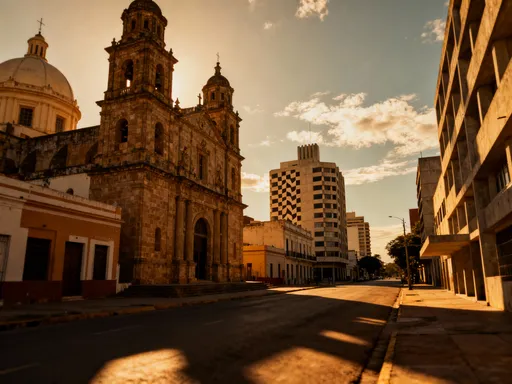
Opposite the palace stands the Catedral Metropolitana de Nuestra Señora de la Asunción, a structure that blends Gothic revival elements with colonial construction methods. Its twin spires rise above the surrounding buildings, serving as a visual anchor in the cityscape. The cathedral’s façade features pointed arches, ribbed stonework, and intricate carvings, though its interior is more restrained, reflecting the practical constraints of its time. Photographers will appreciate the interplay of light through its stained-glass windows, especially in the late afternoon when golden rays illuminate the nave. To capture the full symmetry of the plaza, a wide-angle lens is recommended, ideally used from the center of the square to include both the palace and cathedral in a single frame.
Surrounding the plaza are additional landmarks, including the Cabildo—the former colonial town hall—and the Monumento a los Fundadores, a modest obelisk honoring the city’s founders. These structures, though less ornate, contribute to the cohesive historical atmosphere of the area. The cobblestone streets and shaded walkways lined with palm trees add to the charm, offering framing elements for composition. For those interested in capturing human-scale interactions within the architectural setting, the plaza is often alive with locals, street vendors, and occasional civic events, providing context and movement within static shots.
Art Deco Secrets in the Old Neighborhoods
While the historic center showcases Asunción’s colonial and neoclassical heritage, the city’s residential neighborhoods hold a quieter, equally captivating treasure: art deco architecture from the early 20th century. Areas like Pocitos, Recoleta, and parts of the Mariscal Estigarribia district are home to well-preserved homes and apartment buildings that reflect the cosmopolitan tastes of the 1920s to 1940s. These neighborhoods were once favored by affluent families and foreign diplomats, and their streets still carry an air of elegance and refinement.
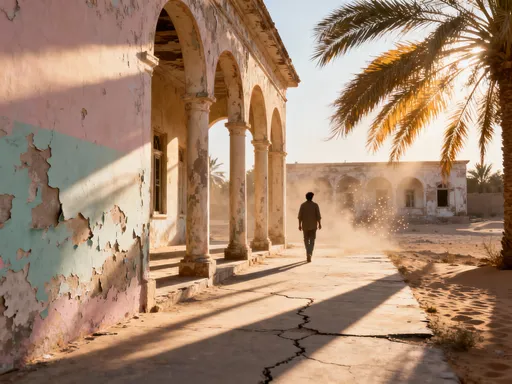
The art deco buildings in these areas are characterized by their pastel-colored façades—soft pinks, mint greens, and buttery yellows—that contrast beautifully with the tropical sky. Geometric patterns in stucco work adorn entryways and upper levels, often featuring sunbursts, chevrons, and stepped motifs typical of the international art deco style. Wrought-iron balconies with intricate scrollwork add a delicate touch, while rounded corners and streamlined forms suggest a forward-looking optimism. Many of these homes retain original details such as tiled entryways, wooden shutters, and decorative cornices, making them ideal subjects for close-up photography.
What sets these neighborhoods apart is their preservation. Unlike in many Latin American cities where older homes have been replaced by modern high-rises, Asunción’s art deco residences remain largely intact. This is due in part to the city’s slower pace of development and the cultural value placed on family-owned properties. Many homes have been passed down through generations, with owners maintaining their original features out of pride and tradition. As a result, walking through Pocitos feels like stepping into a bygone era, where architecture still tells the story of a city’s aspirations during a period of growth and modernization.
For photographers, these neighborhoods offer endless opportunities for detail shots and atmospheric compositions. Early morning or late afternoon light enhances the pastel hues and casts long shadows across textured walls. A macro lens can reveal the craftsmanship in ironwork and tile patterns, while a standard prime lens works well for capturing full façades with contextual surroundings. It’s important, however, to be respectful when photographing private homes. Avoid intrusive angles, do not trespass, and be mindful of residents’ privacy. A polite nod or smile when noticed can go a long way in fostering goodwill.
Modern Contrasts: Brutalism and Contemporary Design
Asunción’s architectural narrative does not end with the mid-20th century. The post-1950s era introduced a wave of modernist and brutalist structures that reflect the city’s engagement with global architectural trends. While often overlooked by casual visitors, these buildings offer a compelling counterpoint to the ornate styles of earlier periods. Their raw, functional forms—characterized by exposed concrete, angular geometries, and minimal ornamentation—speak to a different kind of beauty, one rooted in honesty of materials and purpose.
One of the most notable examples is the campus of the Universidad Nacional de Asunción, particularly its administrative and academic buildings constructed during the 1960s and 1970s. These structures embrace the principles of brutalism, with massive concrete slabs, deep recesses, and repetitive modular elements. The play of light and shadow across these surfaces creates dramatic contrasts, especially during midday when the sun is high. For black-and-white photography, these buildings are ideal subjects, their textures and forms translating powerfully into monochrome compositions.
Another standout is the Centro Cultural de la República, housed in a renovated former prison building along the riverfront. While the original structure dates back to the 19th century, its 21st-century transformation incorporated modern design elements that respect the site’s history while introducing contemporary functionality. The contrast between old brickwork and sleek glass additions creates a dialogue between past and present, making it a favorite among photographers interested in architectural juxtaposition.
These modern structures may not have the immediate visual appeal of art deco or colonial buildings, but they offer a deeper understanding of Asunción’s evolution. They reflect periods of political change, educational expansion, and cultural redefinition. For those willing to look beyond surface aesthetics, these buildings reveal a city that has continually reinvented itself. When photographing brutalist architecture, a polarizing filter can help manage harsh sunlight, and a wide-angle lens can emphasize the scale and imposing nature of the forms. Shooting from low angles can enhance the sense of monumentality, while close-ups of weathered concrete surfaces tell stories of time and resilience.
Religious Architecture with a Local Soul
Beyond the grand Catedral Metropolitana, Asunción is home to numerous smaller churches and chapels that embody a unique blend of European influence and Paraguayan craftsmanship. These religious buildings, often nestled in residential neighborhoods or quiet plazas, reflect the deep role of faith in daily life while showcasing regional adaptations in design and materials. Unlike the formal grandeur of the cathedral, these smaller structures often feel more intimate, their architecture shaped by local needs and available resources.
Many of these churches are constructed from red brick and clay tile, materials that are both durable and locally sourced. Their façades may echo Spanish or Italian styles—featuring arched doorways, bell towers, and decorative niches—but the execution often carries a distinctive handcrafted quality. Hand-painted murals, wooden altars carved by local artisans, and stained glass with regional motifs add layers of cultural meaning. Inside, the use of natural light through high windows creates a contemplative atmosphere, perfect for quiet reflection and soft-lit photography.
One example is the Iglesia de la Encarnación in the Recoleta neighborhood, a modest yet elegant structure with a rose window and a gently curved façade. Its interior walls are adorned with religious scenes painted in warm earth tones, reflecting a blend of indigenous and Catholic symbolism. Another is the Capilla de los Jesuitas in the historic district, a remnant of the city’s early missionary past, where thick stone walls and a simple cross evoke a sense of timelessness.
For photographers, these smaller churches offer opportunities to capture both exterior and interior details without the crowds often found at major tourist sites. The best times to visit are early morning or late afternoon, when the light is soft and the interiors are gently illuminated. Using a tripod allows for longer exposures in dimly lit spaces, preserving the mood without relying on flash, which may be discouraged in sacred settings. These buildings, though less prominent, are essential to understanding the spiritual and architectural fabric of Asunción.
Street-Level Details: Doors, Tiles, and Ironwork That Tell Stories
While grand facades and monumental buildings capture attention, some of Asunción’s most compelling architectural stories are told at street level. The city is filled with small, often overlooked details—ornate wooden doors, handcrafted ceramic tiles, and intricate iron grilles—that reflect a fusion of cultural influences. These elements, though functional, are also deeply expressive, revealing the tastes, traditions, and craftsmanship of those who built and lived in these homes.
Wooden doors in older neighborhoods frequently feature carved panels with floral or geometric patterns, some showing clear Spanish or Moorish inspiration. Others incorporate Paraguayan motifs, such as representations of native plants or symbols from local folklore. Many are painted in bold colors—deep blues, terracotta reds, or forest greens—adding vibrancy to the streetscape. Ceramic tiles, often found around entrances or along lower façades, display intricate patterns in blues, whites, and yellows, reminiscent of Portuguese and Mexican talavera work. These tiles were not only decorative but also practical, helping to regulate indoor temperatures in the subtropical climate.
Wrought-iron grilles and window bars are another hallmark of Asunción’s architectural character. Far from being mere security features, they are often works of art, with swirling vines, stars, and interlocking shapes forged by skilled metalworkers. Some date back to the early 20th century and have been carefully maintained over decades. Photographing these details requires attention to light and angle—side lighting enhances texture, while backlighting can create striking silhouettes.
For macro photography, a dedicated lens allows for sharp focus on fine craftsmanship, while a standard zoom can capture these elements in context with their surroundings. These details may seem minor, but together they form a visual language that speaks of heritage, identity, and care. They remind us that architecture is not just about grand designs, but about the everyday choices that shape a city’s soul.
Photography Tips and Logistics for Capturing Asunción’s Architecture
To fully appreciate and document Asunción’s architectural diversity, a thoughtful approach to gear, timing, and etiquette is essential. A versatile camera setup is recommended—ideally including a wide-angle lens for capturing full façades and tight urban spaces, a standard prime lens (such as a 50mm) for balanced compositions, and a macro lens for detailing textures and craftsmanship. A lightweight tripod is useful for interior shots or low-light conditions, especially in churches or shaded alleyways.
Lighting plays a crucial role in architectural photography, and Asunción’s subtropical climate offers both opportunities and challenges. The golden hours—shortly after sunrise and before sunset—provide soft, warm light that enhances colors and creates long shadows, ideal for emphasizing texture and depth. Midday light can be harsh, but it works well for high-contrast black-and-white images, particularly of brutalist structures. Overcast days, though less vibrant, offer diffused light that minimizes glare and is excellent for capturing subtle details.
Walking is the best way to explore Asunción’s architectural gems. The city center and surrounding neighborhoods are largely pedestrian-friendly, with tree-lined sidewalks and manageable distances between key sites. Comfortable shoes, water, and sun protection are advisable, especially during the warmer months. Local cafes near the Plaza de Armas or in Pocitos offer restful spots to pause between shoots, serving strong Paraguayan coffee and light snacks.
When photographing, it’s important to be respectful of private property and cultural norms. While public buildings and streetscapes are generally open for photography, it’s courteous to avoid pointing cameras directly into homes or private courtyards. If photographing inside churches, ask for permission if signs are posted, and avoid using flash during services. Government buildings may have restrictions on tripod use or close-range拍摄, so it’s wise to observe posted rules and local behavior. Overall, a calm, observant presence will be welcomed by residents and enhance the authenticity of your experience.
Conclusion
Asunción doesn’t shout its beauty—it whispers. But for those with a camera and a curious eye, it offers a rare visual feast. Its architecture isn’t just about style; it’s a record of resilience, fusion, and quiet pride. Whether you’re drawn to grand facades or tiny details, this city rewards patience and perspective. Pack your lens, step off the beaten path, and let the walls tell their stories.